The Most Overused Word in Cybersecurity Marketing

Henry Kogan

Key Takeaways
- “Signals” are everywhere in cybersecurity marketing—but they’re often meaningless without context.
- Signals ≠ intent: signals are observations; intent reflects motivation and buying readiness.
- Misusing weak signals leads to bad leads and broken trust between marketing and sales.
High-quality intent data—rooted in real research behavior—drives measurable pipeline impact.
If you remember nothing else:
Signals are clues. Intent is conviction.
Why “Signal” Became Cybersecurity Marketing’s Kale
In 2025, cybersecurity marketers began using the word “signal” the way food bloggers once used “kale”—frequently, aggressively, and with questionable justification.
I take no joy in this comparison because I genuinely do not enjoy kale.
I mocked kale when it was luxury cow food.
I ignored it when it became the decorative buffet garnish.
I rejected it entirely when someone claimed toasted kale tasted like “a green potato chip.”
Fun Kale Fact #1: Kale was used primarily as animal feed until the late 20th century—humans only embraced it once marketing got involved.
It didn’t taste like a chip. It tasted like sadness pretending to be crunchy.
The sudden popularity of signals in cybersecurity marketing feels identical: an overhyped rebranding of something that’s existed forever, was mostly ignored, and is now positioned as a miracle cure for problems it didn’t solve.
Fun Kale Fact #2: Kale consumption in the U.S. increased over 400% between 2007 and 2012—not because it changed, but because the narrative did.
Signals vs. Intent: Why the Words Are Not Interchangeable
Signal and intent are not interchangeable, and treating them as synonyms is as misguided as believing kale chips will spark joy.
A signal is information.
Intent is motivation.

A traffic light tells you what’s happening.
A driver’s intent tells you where they’re actually going.
Fun Kale Fact #3: Kale is nutritionally dense but incredibly low in calories—much like many marketing signals: impressive on paper, insufficient in practice.
Signals are observations.
Intent explains why the observation matters.
When Signals Mean Absolutely Nothing
Sometimes signals are just noise.
Your Wi-Fi drops.
Your phone buzzes with no notification.
Your fridge beeps like it’s trying to communicate emotionally.
These are signals—but they predict nothing.
Fun Kale Fact #4: Kale contains compounds that can interfere with thyroid function if consumed excessively—proving that even “healthy” things become harmful when overused.
For years, cybersecurity marketing treated similar meaningless blips as buyer intent, which is how we ended up chasing leads with the nutritional payoff of decorative kale garnish.
The Bat Signal Test: What Real Intent Looks Like
If you want a true example of a signal that does reflect intent, look at the Bat Signal.
When Gotham lights it up, Batman shows up. Every time.
That’s not engagement. That’s commitment.
Fun Kale Fact #5: Kale is part of the brassica family, alongside cabbage and Brussels sprouts—vegetables nobody tried to rebrand as a personality trait.
Every cybersecurity vendor claims to have Bat-Signal-level buyer indicators. Most are actually selling:
- Flickering streetlamps
- Broken flashlights
- iPhone notifications that disappear when tapped
Mixed Signals, Bad Leads, and Broken SDR Dreams
Mixed signals are familiar to anyone who’s ever heard, “We should hang out sometime!”
Signal? Yes.
Intent? Absolutely not.
Fun Kale Fact #6: Kale was once banned from certain school lunch programs because kids simply refused to eat it—much like sales teams refuse leads based on weak signals.
Yet in marketing, one accidental blog click still triggers SDRs to assume destiny has spoken.
What Intent Actually Is (and Isn’t)
Intent is the digital equivalent of searching Amazon at 2 a.m. for:
“weighted blanket my dog won’t destroy”
That’s urgency. That’s need. That’s intent.
Scrolling past a blanket video while half-asleep?
That’s just a signal.
Fun Kale Fact #7: Kale’s bitterness comes from compounds meant to deter predators—which explains why it requires sauces, oils, and apologies to be consumed.
Only one behavior results in a package arriving tomorrow, and that’s the moment you search Amazon at 2 a.m. for “weighted blanket my dog won’t destroy.” That’s intent. That’s need. That’s urgency.

When to Use “Signal” vs. When to Say “Intent”
Use “signal” when:
- Something happened
- You don’t know what it means yet
- The behavior is passive or isolated
Examples include: impressions, random clicks, booth walk-bys motivated by free swag.
Fun Kale Fact #8: Kale became a wedding décor trend in the early 2010s—appearing everywhere despite nobody asking for it.
Use “intent” when:
- Behavior predicts action
- Multiple signals align around a pain point
- Activity maps to an active buying cycle
Examples include: User search behavior, sustained research on a topic, and multi-person engagement.
Signals are kale.
Intent is garlic bread.
What Industry Leaders Say About Intent Data
“Intent data isn’t about volume—it’s about relevance.”
— Jon Miller, Co-Founder, Marketo
“True intent shows momentum, not motion.”
— Sangram Vajre, Co-Founder, Terminus
“First-party research behavior is one of the strongest predictors of purchase.”
— Forrester Research
Fun Kale Fact #9: Kale has more vitamin C than an orange—but still won’t make dessert acceptable.
Real Success Stories: When Intent Data Actually Works
Pipeline Acceleration:
A cybersecurity vendor used research-based intent data to prioritize accounts already in-market.
→ 35% shorter sales cycles
ABM Performance:
An enterprise firm targeted full buying committees showing aligned intent.
→ 2.4× account engagement
Sales Trust Restored:
By filtering out weak signals, a mid-market vendor reduced false positives.
→ Fewer bad leads, more real conversations
Fun Kale Fact #10: Kale’s popularity peaked and declined—proof that hype cycles always end, but fundamentals matter.
Final Takeaway: Kale, Carbs, and Common Sense
I’ll keep using the word signal—because hype exists—but with a caveat.
The distinction is simple:
- Signals are clues
- Intent is conviction
- Signals are breadcrumbs
- Intent is a map
- Signals are kale
- Intent is carbs
And nobody—marketing, sales, or human—thrives on kale alone.
Want to learn what intent really looks like and how you can identify those visible buyers, not just meaningless signals? Watch the interview with ISMG experts Ron Glucksman and Anna Delaney: How to Influence the Invisible Cybersecurity Buyer
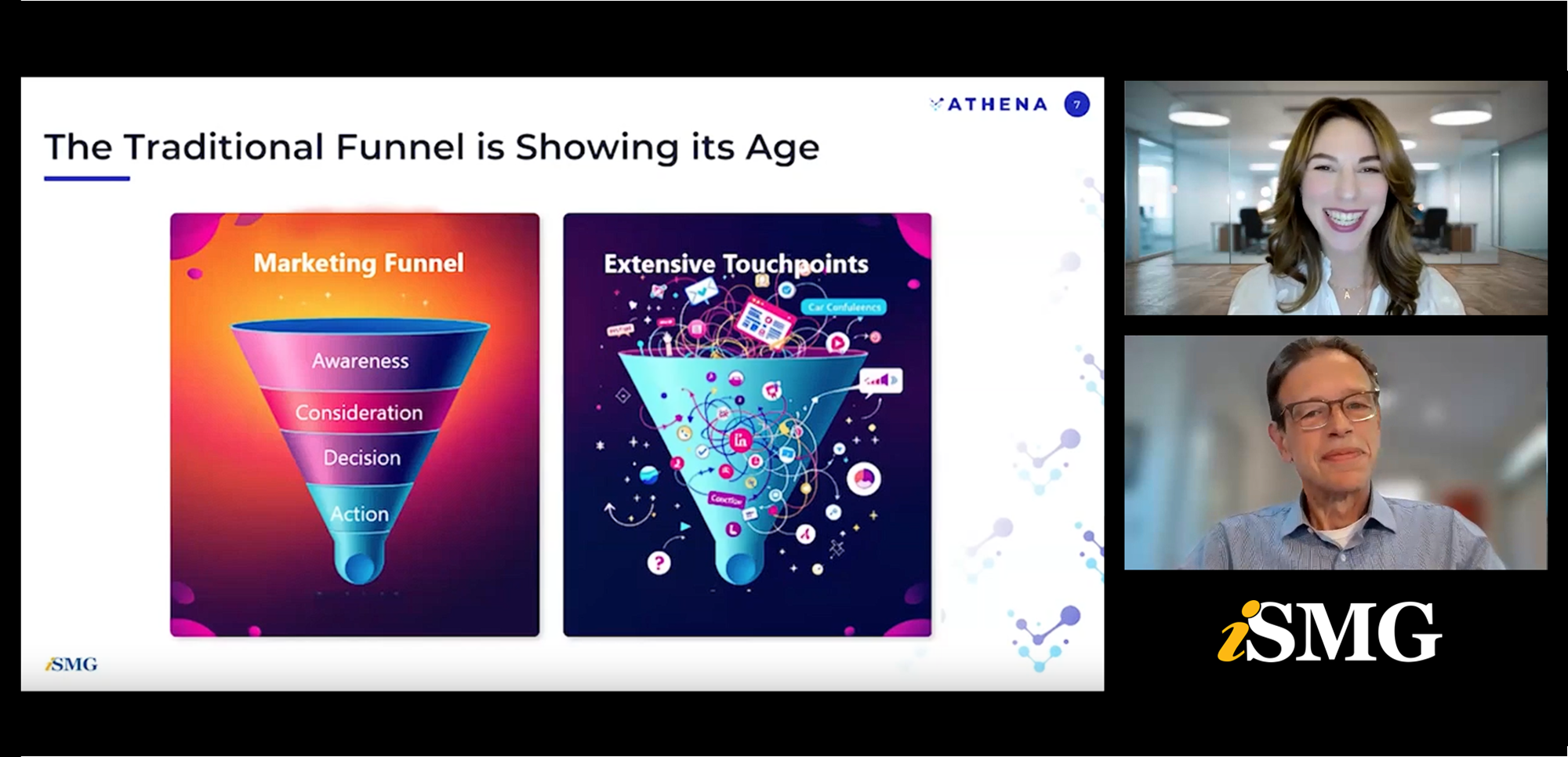
In this on-demand interview, ISMG leaders Ron Glucksman, Managing Director of Growth Strategy, and Anna Delaney, Executive Director of Productions, unpack the new realities of cybersecurity marketing — where traditional funnels no longer capture how modern buyers make decisions.
They explore how today’s best-performing marketing teams are using intent-driven intelligence and trusted content ecosystems to uncover hidden demand long before it appears in the pipeline. You’ll learn how to identify which accounts are actively researching, understand what topics are driving their interest, and engage key decision-makers before your competitors even know they’re in play.