Selecting the Best Cybersecurity Webinar Speakers

Most content teams lose time in the same place: figuring out who should be involved after a project is already underway.
You need a webinar guest, so you ask around. You need a blog quote, so you Slack three SMEs. You need a video spokesperson, so you default to whoever raised their hand last time — even if it didn’t go well.
This is how “quick wins” quietly turn into slow, painful slogs.
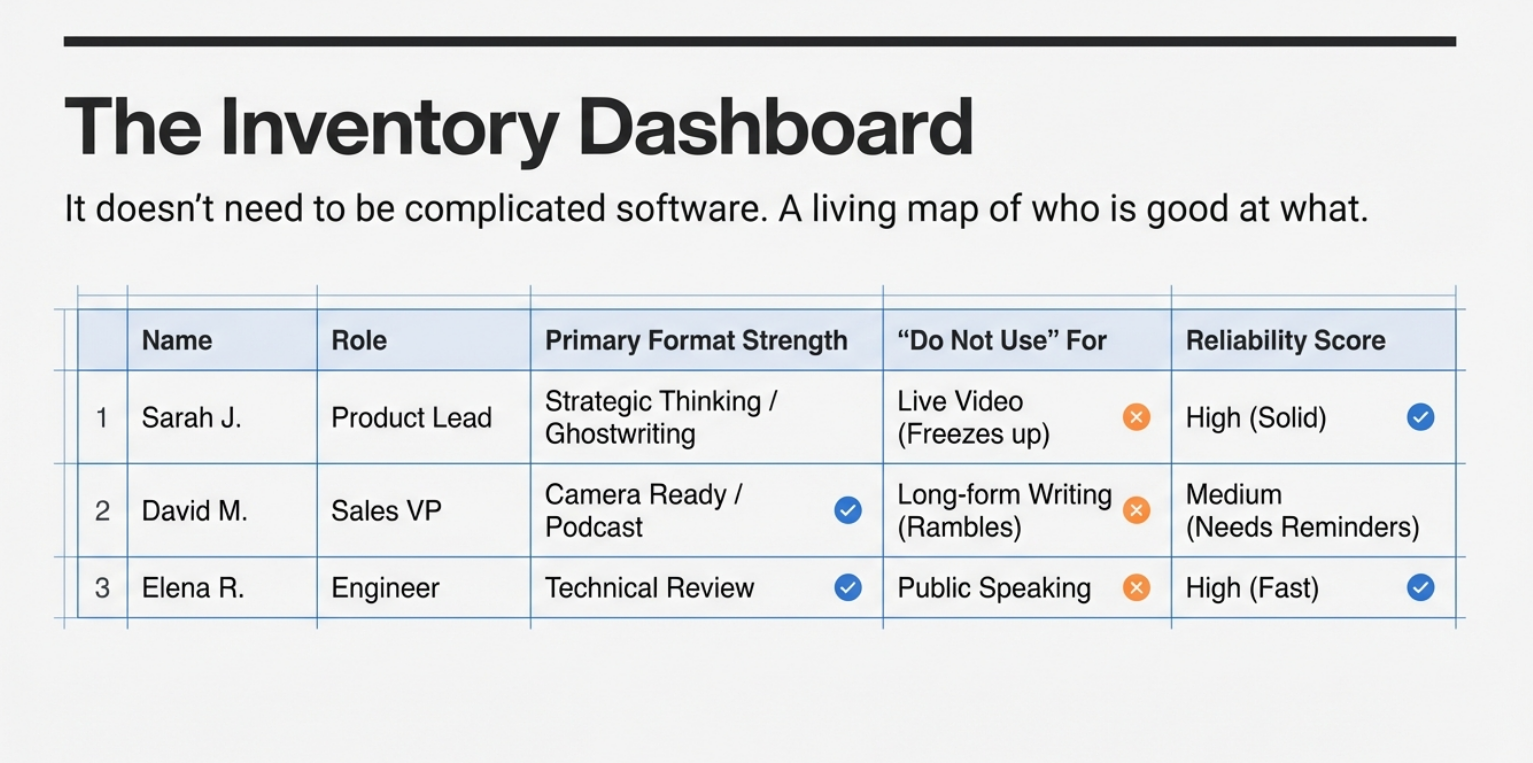
The fix isn’t more tools, better templates, or stricter deadlines. It’s building a human skill inventory — a living map of who on your team is actually good at what, in which formats, and under what conditions.
Once you have that, content speed stops being a guessing game.
Start by Interviewing for Signal, Not Titles
Job titles lie. Skills don’t.
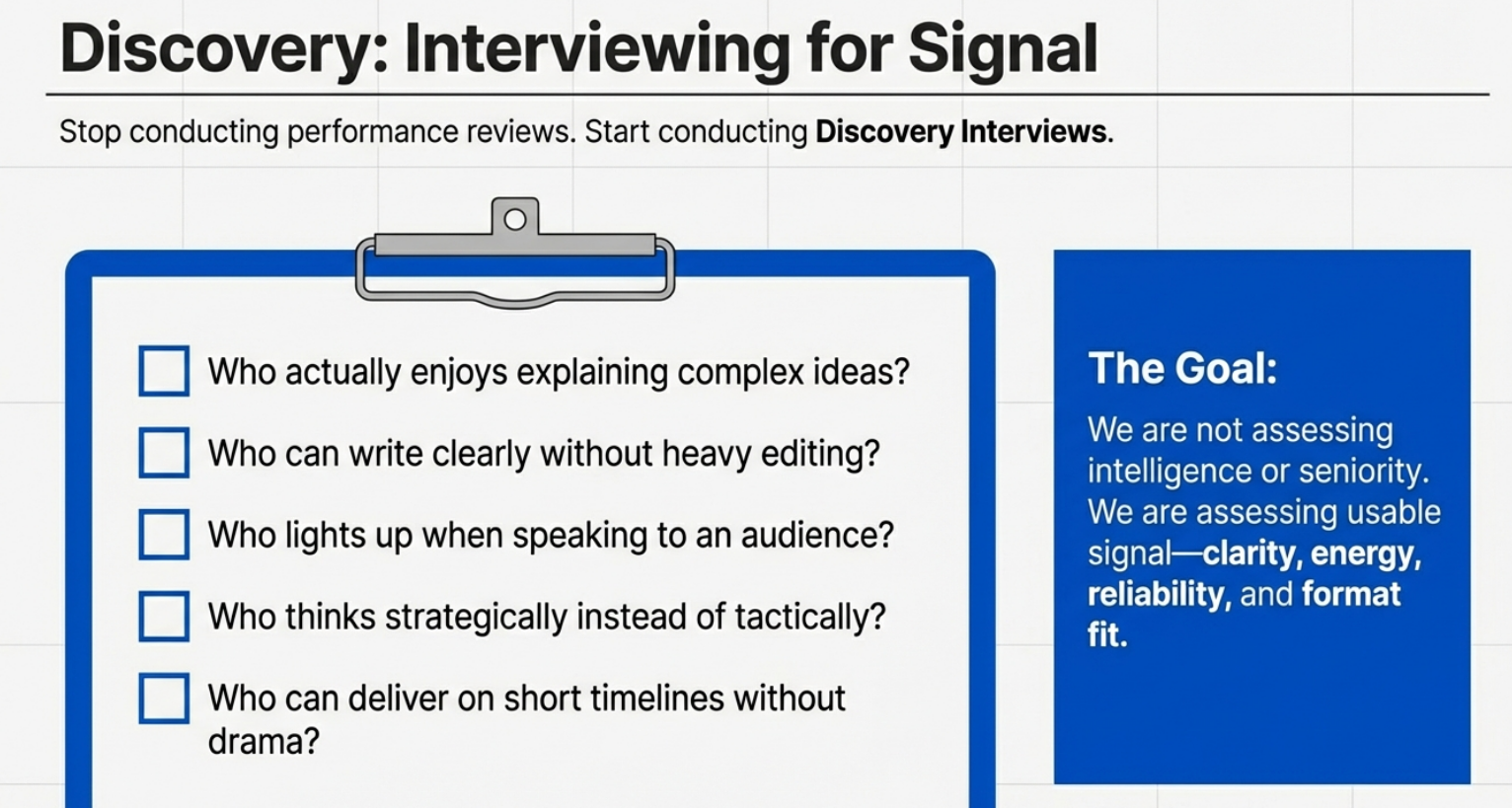
Before you document anything, spend time talking to your team — not in a performance-review way, but in a discovery way. Ask questions like:
- Who actually enjoys explaining complex ideas?
- Who can write clearly without heavy editing?
- Who lights up when speaking to an audience?
- Who thinks strategically instead of tactically?
- Who can deliver on short timelines without drama?
You’re not assessing intelligence or seniority. You’re looking for usable signal: clarity, energy, reliability, and format fit.
Pay attention to how people communicate in casual settings. The person who explains a thorny problem clearly in a hallway conversation is often more valuable than the “official SME” who needs 40 minutes and 12 slides to say the same thing.
Build the Inventory (and Be Specific)
Once you’ve identified patterns, document them. This doesn’t need to be complicated — a simple shared doc or spreadsheet works fine.
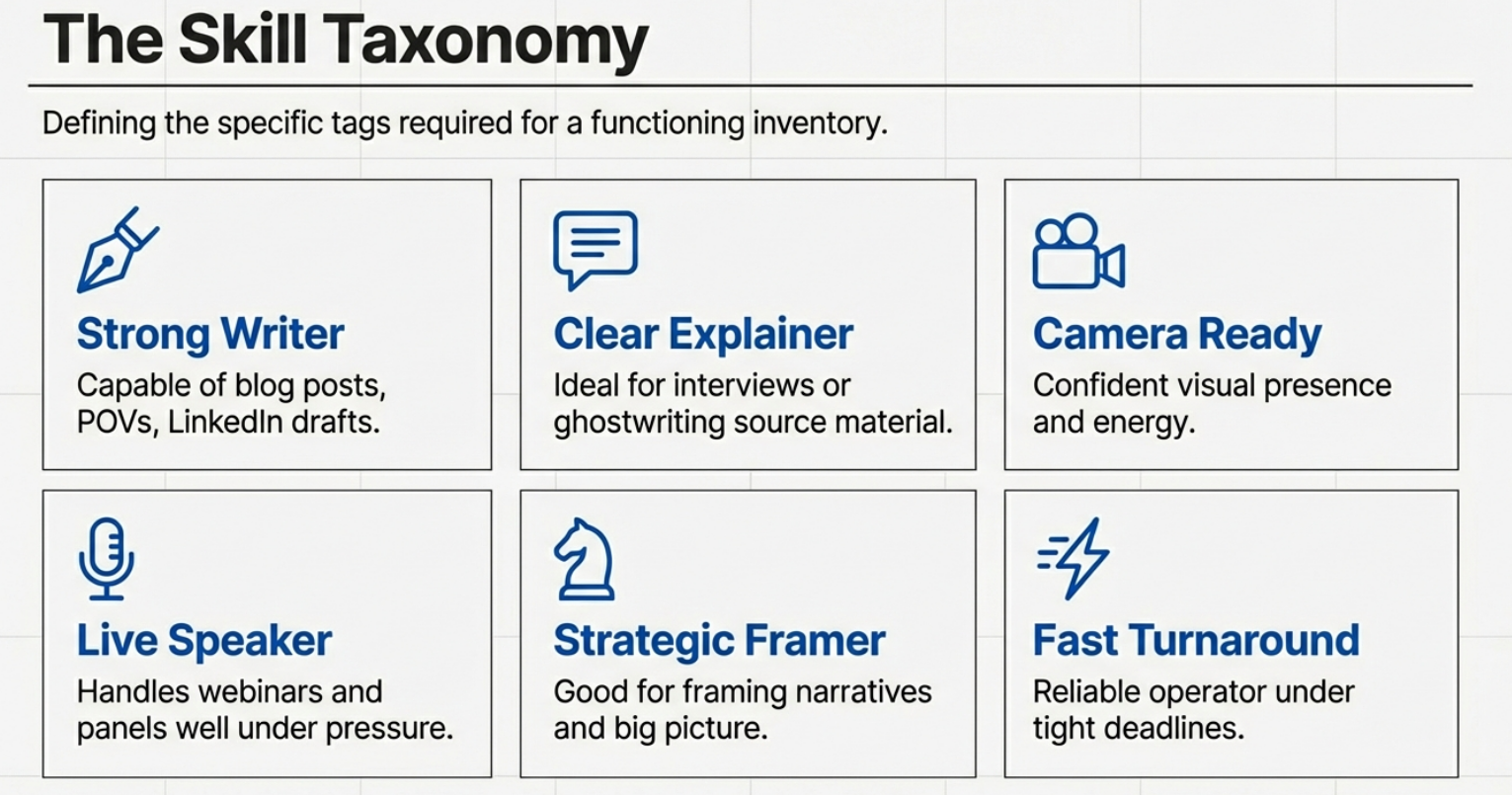
For each person, note things like:
- Strong writer (blog posts, POVs, LinkedIn drafts)
- Clear explainer (great for interviews or ghostwriting)
- Confident on camera
- Strong live speaker (webinars, panels)
- Strategic thinker (good for framing narratives)
- Fast turnaround / reliable under pressure
The goal is speed later. When it’s time to build a webinar, ghostwrite an executive blog, or record a short-form video, you shouldn’t be debating who to involve. You should already know.
This is how mature content engines operate: less scrambling, more execution.
Just as Important: Identify Who to Avoid
This is the part most teams skip — and pay for.
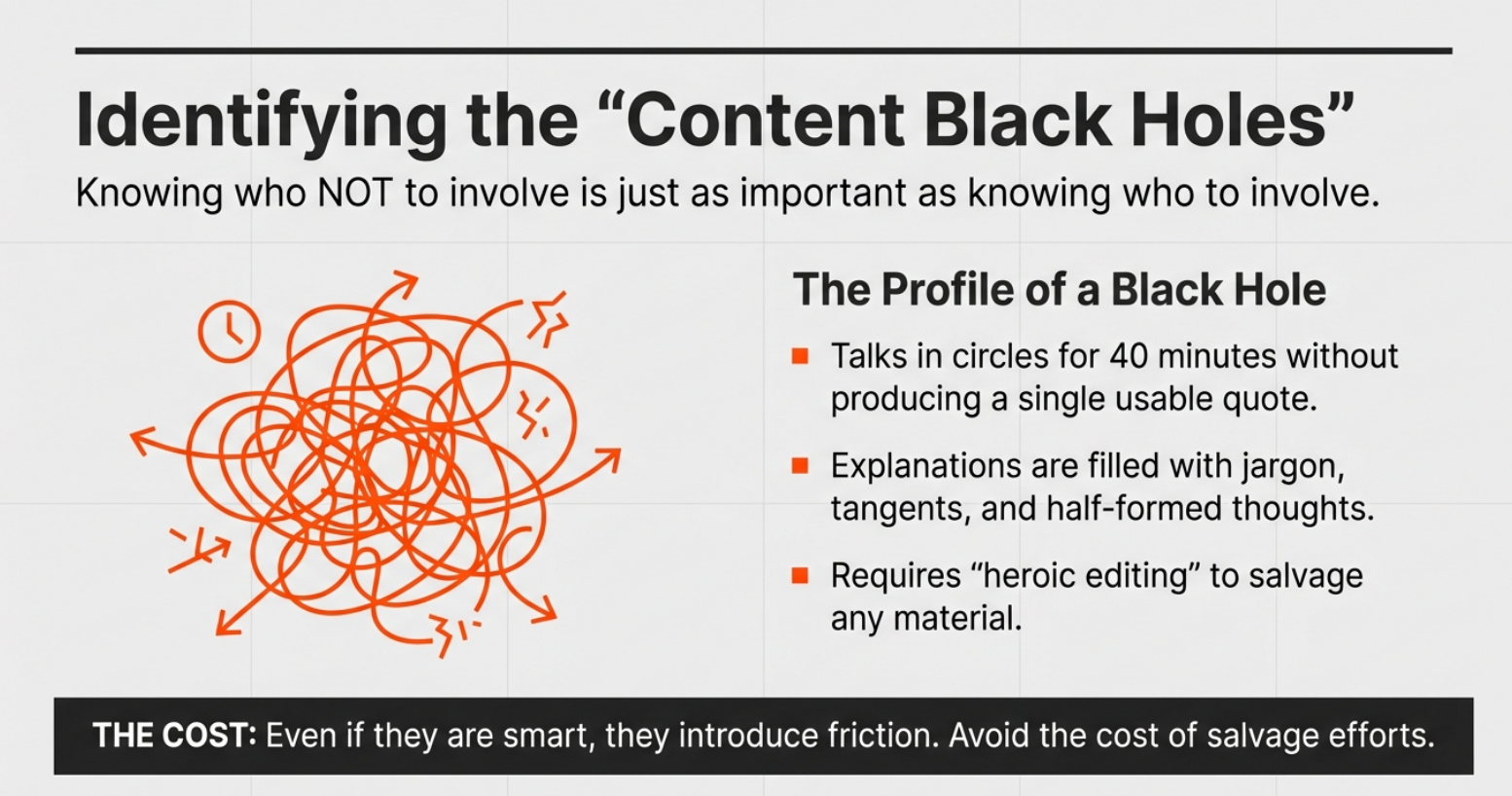
Some people are content black holes. They talk in circles for 40 minutes without producing a single usable quote. Their explanations are filled with jargon, tangents, and half-formed thoughts that require heroic editing to salvage.
Others are unreliable. They miss meetings. They blow deadlines. They say yes enthusiastically and then disappear. No matter how smart they are, they introduce friction into every project.
Then there’s medium mismatch:
- Brilliant technical minds with a monotone webinar voice
- Charismatic in person, frozen on camera
- Great talkers who can’t write a coherent paragraph
- Strategic thinkers who ramble without structure
You can’t build a reliable content engine with unreliable people — or with people forced into the wrong format.
And your job is not to fix them.
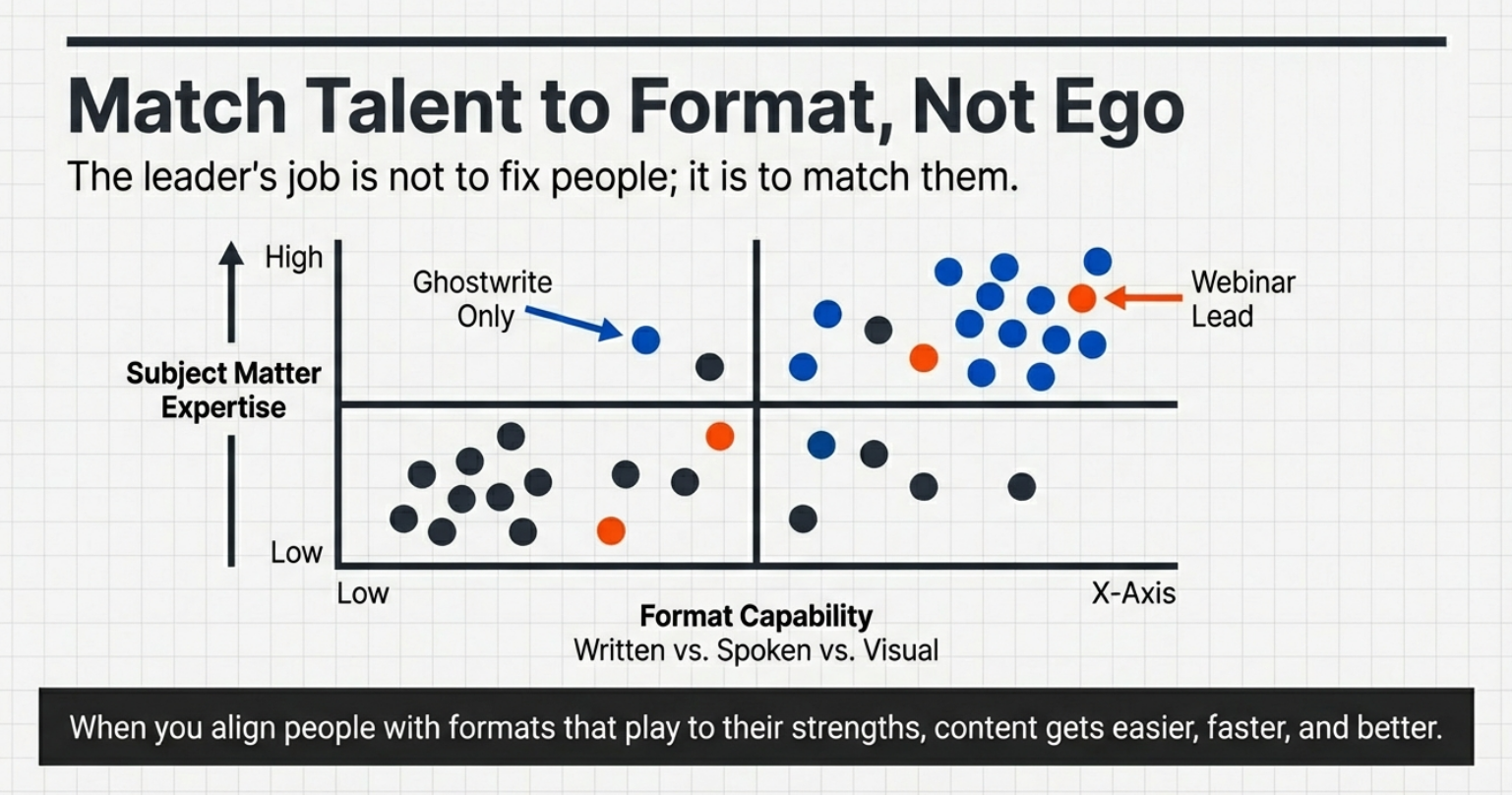
Match Talent to Format, Not Ego
The biggest mistake content leaders make is trying to turn everyone into everything.
Don’t.
The quiet engineer who writes clearly might be perfect for a ghostwritten thought leadership post — even if they’d be terrible on stage. The chatty salesperson with natural charisma might be your best podcast or video guest — even if they can’t outline a blog post to save their life.
This isn’t about favoritism or politics. It’s about format fit.
When you align people with the formats that play to their strengths, content gets easier, faster, and better. When you don’t, everything drags.
Be Diplomatic, But Decisive
You don’t need to announce your human skill inventory. You don’t need to label people publicly. This is an internal operating system — not a public ranking.
But you do need to be decisive.
Take mental (or written) notes now so you’re not scrambling later. Your first few campaigns will likely move fast, and the difference between shipping in two weeks or two months often comes down to knowing who not to involve.
Speed isn’t just about process.
It’s about people.
Build the inventory once, and every piece of content after that gets easier.