Premature Webinar Endings
The Signals Everyone Ignores
Few teams rewatch their own session all the way through, noticing where the energy subtly dipped, where a point lingered too long, or where the chat suddenly came alive. Those final-minute questions — about pricing, integrations, implementation timelines — are not throwaway comments. They are signals. They are intent surfacing in real time. And yet, too often, they are buried in a transcript no one studies.
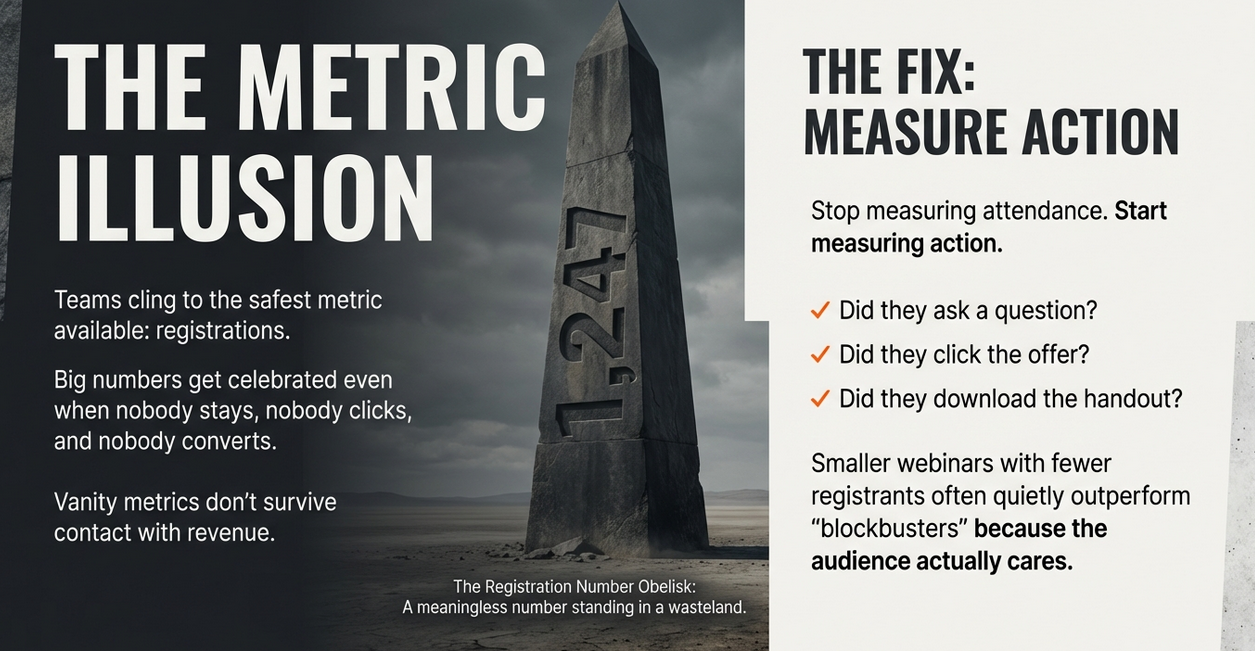
Instead, registrations become the shorthand for success. A large number creates reassurance, even if half the audience disengaged halfway through. Volume is easy to report. Depth requires reflection. Downstream, though, the difference becomes obvious. A smaller group that stayed engaged and asked thoughtful questions almost always produces more meaningful conversations than a crowd that simply clicked “register.”
One Audience, Three Different Experiences
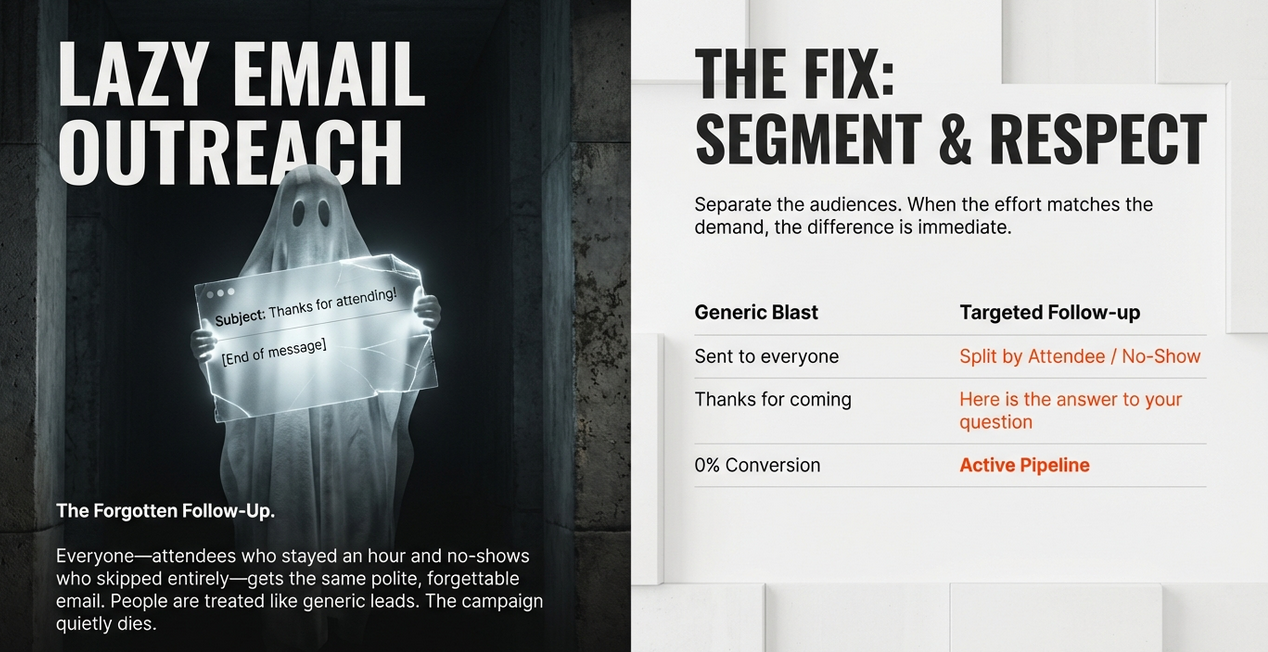
Follow-up flattens nuance even further. The person who stayed for the full hour and the person who never logged in receive the same polite, generic email. The message is technically correct — and strategically empty. It ignores the lived experience of the audience. Predictably, engagement tapers off. Relevance evaporates. Momentum disappears.
Webinars rarely underperform because the topic was weak or the speaker lacked credibility. They underperform because execution stops at the exact moment it becomes most valuable.
The Work That Actually Counts
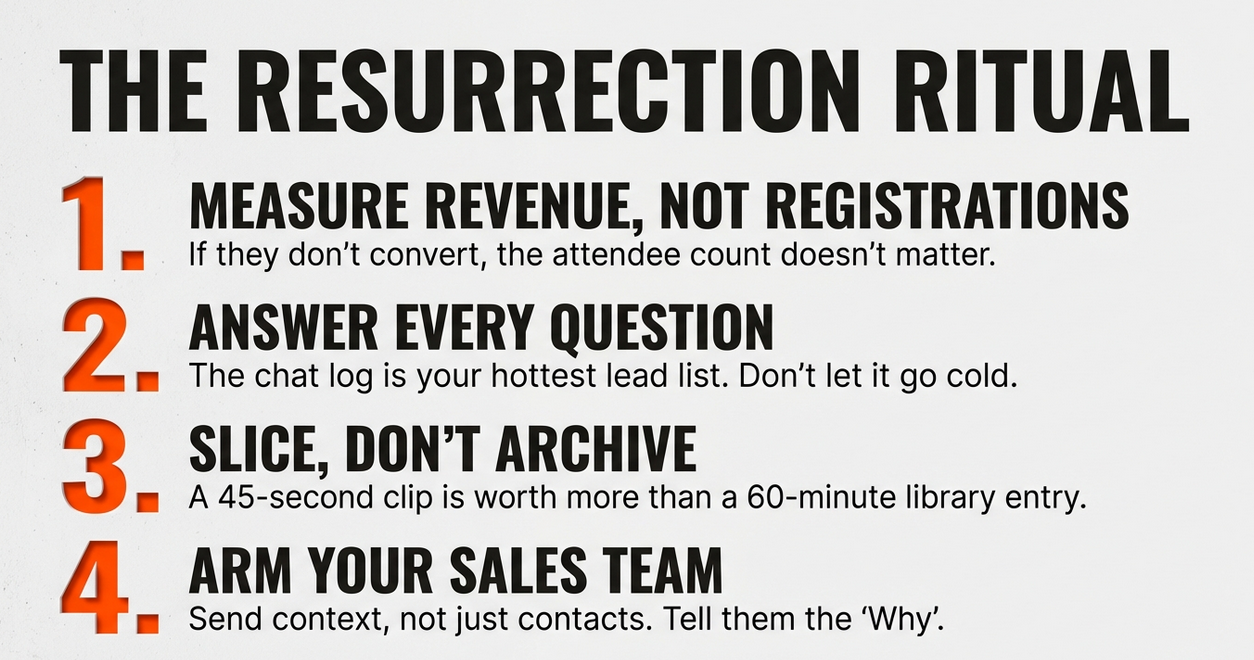
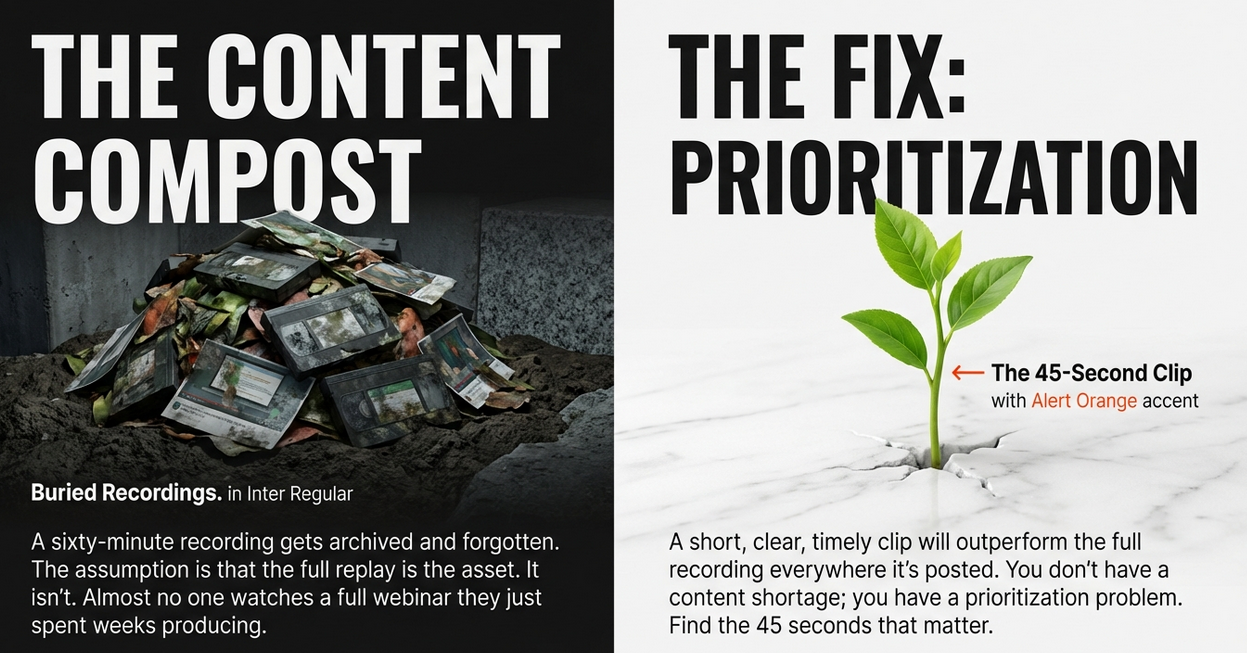
The live session is not the finish line; it’s the midpoint. Within 48 hours, someone should be reviewing what actually happened — identifying where attention spiked, which accounts were active in the chat, what themes repeated in the Q&A. Sales shouldn’t receive a spreadsheet; they should receive context. Follow-ups shouldn’t be uniform; they should reflect what each segment experienced. One sharp clip or one insight-rich slide, thoughtfully reused, can carry more weight than an archived hour-long replay no one revisits.
And before the week closes, there should be a deliberate decision about what comes next — a targeted conversation, a deeper technical briefing, a continuation that feels earned rather than automated. Momentum does not sustain itself simply because an event occurred. It has to be shaped.
Complete the Webinar